Coronary Angiography in London
Why would I be offered this procedure?
A coronary angiogram, often performed by an interventional cardiologist, is used to determine if narrowings in your heart arteries are causing symptoms like chest pain, tightness, or breathlessness. It may also be conducted following abnormal results from tests such as a CT scan, stress test, or ECG. Additionally, it may be necessary before valve surgery or transcatheter aortic valve implantation (TAVI), to assess the heart arteries first, especially in a private angiography London setting.
If your risk of coronary disease is assessed to be lower, we typically recommend starting with a non-invasive CT scan, also known as a CT coronary angiogram. If this scan yields clear results, we can avoid an invasive procedure altogether. However, if it reveals a narrowing that might require treatment, we can then arrange for invasive angiography, allowing significant narrowing to be addressed during the same session.
What is coronary angiography?
Coronary angiography is recognized as the gold-standard test for identifying narrowings in the coronary arteries. This procedure involves the insertion of a long, thin tube known as a catheter, typically through an artery in your wrist (the radial artery), or occasionally through the top of your leg (the femoral artery). A local anaesthetic numbs the area, and sedation is available to help you feel relaxed throughout the procedure.
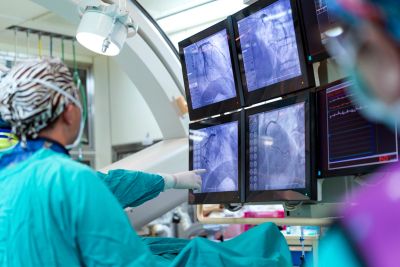
Under the guidance of an interventional cardiologist, the catheter is navigated using X-ray until it reaches your heart. A contrast dye is then injected into each coronary artery, revealing the position, size, and severity of any narrowings or blockages. Typically performed in a private angiography London facility, the test usually takes about 20–30 minutes.
Why the wrist?
We perform the vast majority of coronary angiography procedures through the wrist instead of the groin. This radial approach is more comfortable, enabling patients to sit up and walk almost immediately afterwards. Additionally, it significantly reduces the risk of bleeding, making it a preferred technique for our interventional cardiologists. For those seeking private angiography in London, this method offers added convenience and safety.
What happens if the arteries are clear?
This is reassuring news, and the coronary angiography procedure finishes at that point. We may then arrange other tests to establish the cause of your symptoms, and we will discuss preventive treatment with an interventional cardiologist to keep your arteries healthy. If you're seeking private angiography in London, we can assist you with that as well.
What happens if a narrowing is found?
In most cases, a significant narrowing identified during coronary angiography can be treated immediately by angioplasty and stenting (PCI) within the same procedure — avoiding the need for a second admission. We will have discussed this possibility with you beforehand so you can provide your consent in advance. If a narrowing is of uncertain significance, we utilize pressure-wire measurements during the angiogram to determine whether it is genuinely restricting blood flow, ensuring you are only treated if it will truly be beneficial. Occasionally, the findings indicate that bypass surgery is the better option; in such instances, we will discuss these options with you and refer you to a cardiac surgeon through our Heart Team. For more information, you can visit our dedicated page on coronary angioplasty and stents or consult an interventional cardiologist for private angiography in London.
What are the benefits and risks?
A coronary angiography provides a definitive answer about the state of your heart arteries — information no other test can offer with such precision — and paves the way for immediate treatment if necessary. This procedure is among the most commonly performed in cardiology and is considered very safe. Bruising at the wrist or groin is fairly common and typically resolves on its own; however, serious complications such as damage to an artery, heart attack, stroke, or a reaction to the dye are rare. During your appointment with an interventional cardiologist, we will discuss your individual risks and provide written information to help you make an informed choice, particularly if you're considering private angiography in London.
How long will I be in hospital, and what is the recovery?
A diagnostic coronary angiography is typically a day-case procedure — most patients go home a few hours afterwards, with a small compression band on the wrist for the first couple of hours. It is important to not drive on the day of the procedure, so you'll need someone to take you home; most patients are back to their normal activities within a day or two. If you're considering this procedure, consulting with an interventional cardiologist can provide you with the expertise needed, especially if you are looking for private angiography in London.
How long will I be in hospital, and what is the recovery?
A diagnostic coronary angiography is typically a day-case procedure — most patients go home a few hours afterwards, with a small compression band on the wrist for the first couple of hours. It is important to not drive on the day of the procedure, so you'll need someone to take you home; most patients are back to their normal activities within a day or two. If you're considering this procedure, consulting with an interventional cardiologist can provide you with the expertise needed, especially if you are looking for private angiography in London.
What experience does Dr Demir have in coronary angiography?
Dr. Demir is a Consultant Interventional Cardiologist practicing at leading private angiography London centres. He trained at prestigious London hospitals, including St Thomas’ and Hammersmith, and completed an advanced fellowship in coronary and structural interventions in Milan, Italy. Regularly performing coronary procedures, he prioritizes a radial-first approach and routinely utilizes pressure-wire assessment to ensure that his treatment decisions are precise and evidence-based.
How do I book?
To arrange a consultation for private angiography in London, please contact Ms. Melinda Ziff (PA) at 020 3198 9826 or via email at drozandemir.sec@outlook.com. Our experienced interventional cardiologist will guide you through the coronary angiography process.